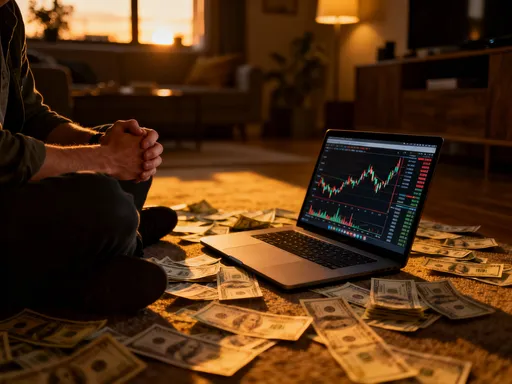
What I Learned About Investing When I Lost My Job
Losing my job was a gut punch. Overnight, my income vanished, and panic set in. But that crisis forced me to rethink everything—especially money. I had no safety net, just fear and a stubborn will to survive. That’s when I started learning about investing, not as a get-rich-quick scheme, but as a way to regain control. What I discovered wasn’t magic, just practical moves anyone can make. This is how I turned fear into focus—and how you can too, even if you’re starting from zero.
The Wake-Up Call: When Income Disappears Overnight
The moment the termination letter arrived, time seemed to freeze. One day, I was managing projects and planning budgets; the next, I was sitting at my kitchen table, staring at a spreadsheet that no longer balanced. The emotional weight was crushing—shame, confusion, and a deep sense of failure. But beneath the emotions lay a stark reality: my monthly income had disappeared, yet my expenses remained. Rent, utilities, groceries, insurance—none of these paused because I lost my job. That disconnect between outgoing costs and zero incoming cash created a pressure unlike anything I’d faced before.
This kind of financial shock is more common than many realize. According to labor statistics, nearly one in five workers experiences involuntary job loss during an economic downturn. For those without emergency savings, the consequences can spiral quickly. What surprised me most wasn’t the loss itself, but how fast my sense of control unraveled. I had always believed I was responsible with money—paying bills on time, avoiding credit card debt—but I hadn’t built a financial buffer. That oversight turned a professional setback into a full-blown personal crisis.
Yet within that crisis lay a turning point. Instead of retreating into denial or despair, I chose to confront the numbers. I listed every expense, every asset, and every potential source of support. That act alone—simply facing the truth—began to restore a sense of agency. I realized that while I couldn’t control the job market or corporate decisions, I could control my response. And the first step in that response was not job hunting, but financial triage: stabilizing my situation so I could think clearly and act wisely. That clarity led me to a truth many overlook: financial resilience isn’t built when times are good—it’s forged in moments of hardship.
What followed wasn’t a sudden transformation, but a series of deliberate choices. I stopped seeing money as something that just happened to me and began viewing it as a system I could manage. That shift in mindset—from passive recipient to active steward—was the real beginning of my recovery. It wasn’t about getting rich or chasing stock tips. It was about survival, dignity, and the quiet determination to rebuild. And it was in that space of vulnerability that I first encountered the idea of investing—not as a luxury for the wealthy, but as a practical tool for anyone trying to regain stability.
First Moves: Stabilizing Your Financial Foundation
Before any thought of investing could take root, I had to create breathing room. My first priority was not growth, but preservation. I needed to stretch every dollar and eliminate waste. That meant conducting a full audit of my spending. I printed out bank statements, categorized every transaction, and identified where money was quietly slipping away. Subscription services I barely used—streaming platforms, meal kits, fitness apps—added up to over $150 a month. Canceling them wasn’t painful; it felt like reclaiming control.
Next, I renegotiated fixed costs. I called my internet and phone providers and asked for lower rates, explaining my financial hardship. To my surprise, both offered reduced plans or temporary discounts. I switched insurance providers for car and renters coverage, comparing quotes online and saving nearly 20 percent annually. These weren’t dramatic moves, but together, they freed up hundreds of dollars each month—money that could now serve as a buffer rather than vanish into routine bills.
I also reached out to creditors and service providers to explain my situation. Many utility companies offer hardship programs that allow deferred payments or extended due dates. My electricity provider enrolled me in a budget billing plan, smoothing out seasonal spikes. My landlord, though initially firm, agreed to a two-month rent reduction when I provided documentation of my unemployment claim. These conversations were uncomfortable, but necessary. Pride had no place in survival.
At the same time, I filed for unemployment benefits immediately. The process was tedious, but the weekly payments—though modest—provided critical relief. I also explored local assistance programs: food banks, community aid organizations, and workforce development centers that offered free financial counseling. One such session introduced me to the concept of a “bare-bones budget,” which distinguished between needs and wants. Needs included shelter, food, basic transportation, and essential healthcare. Everything else was negotiable.
This period taught me that financial stability begins not with earning, but with managing. Every dollar saved was a dollar that didn’t need to be earned immediately. That mindset shift—from income dependency to expense awareness—was foundational. It also laid the groundwork for investing. Because once I had a clear picture of my minimum survival costs, I could begin to think about what to do with any surplus, no matter how small. Protecting what I had became the first act of building wealth, not the opposite.
Why Investing Isn’t Just for the Employed (And Why It’s Safer Than You Think)
For years, I believed investing was something people did after they achieved financial security. You got a stable job, saved a nest egg, and then—maybe—ventured into stocks or mutual funds. Losing my job shattered that assumption. I realized that waiting for perfect conditions meant never starting at all. More importantly, I learned that keeping all my money in a savings account, while seemingly safe, was actually a slow form of loss. Inflation, the quiet rise in prices over time, steadily erodes purchasing power. A dollar saved today will buy less tomorrow, and significantly less ten years from now.
Consider this: if inflation averages 3 percent annually, $1,000 left in a zero-interest account will lose nearly a quarter of its value in ten years. That means the same amount of money will only cover about 77 percent of the goods and services it could today. That’s not risk-free—that’s guaranteed decline. By contrast, even modest investment returns can outpace inflation. Historically, broad market index funds have returned an average of about 7 to 10 percent annually over the long term. Even after inflation, that leaves real growth—the kind that preserves, and eventually increases, buying power.
What changed my perspective was understanding that investing is not about speculation. It’s not about picking hot stocks or timing the market. It’s about participation. When you invest in a diversified fund, you’re not betting on a single company’s success. You’re owning a tiny piece of an entire economy. That ownership generates returns through dividends and long-term appreciation. The key is time, not timing. The longer your money is invested, the more it benefits from compounding—the process where returns generate their own returns.
I also realized that risk is not binary. It’s not simply “safe” versus “risky.” Cash has risk. Holding everything in physical currency or low-yield accounts carries the risk of losing value. Meanwhile, diversified, long-term investing in low-cost index funds carries volatility—short-term ups and downs—but historically, it has been a reliable way to build wealth over decades. The real danger isn’t market fluctuations; it’s inaction. By staying out of the market, I was accepting a guaranteed loss. By entering it wisely, I could aim for growth, even during uncertain times.
This understanding transformed my fear into focus. I stopped seeing investing as a luxury and began to view it as a necessity—a tool for protecting my future, even when my present felt unstable. It wasn’t about getting rich quickly. It was about refusing to let inflation silently steal my savings. That shift in thinking allowed me to take the first real step toward financial recovery.
Starting Small: Low-Cost, Low-Risk Entry Points
One of my biggest misconceptions was that investing required large sums of money. I imagined needing thousands to open a brokerage account or buy shares in desirable companies. That belief almost stopped me before I began. But then I discovered micro-investing platforms and fractional shares—tools that allow people to start with as little as $5. These services let you purchase a portion of a stock or fund, making high-priced assets accessible. For example, a single share of some major companies can cost hundreds or even thousands of dollars, but with fractional investing, you can own a piece of that company for just a few dollars.
I started with an app that automatically invested my spare change. Every time I made a purchase, it would round up the amount to the nearest dollar and invest the difference. A $3.75 coffee would trigger a $0.25 investment. It felt trivial at first, but over a month, those small amounts added up to nearly $30. More importantly, it established a habit. The act of investing, no matter how small, became routine. It was no longer an abstract idea; it was something I was doing, consistently.
I also explored index funds and exchange-traded funds (ETFs). These are collections of stocks or bonds that track a market index, like the S&P 500. Because they’re diversified—holding dozens or hundreds of companies—they reduce the risk of any single investment failing. If one company performs poorly, others in the fund can offset the loss. I chose a low-cost, broad-market ETF with an expense ratio below 0.10 percent. That means for every $1,000 invested, I’d pay less than $1 per year in fees—far cheaper than actively managed funds, which often charge ten times more.
What mattered most was consistency. I set up automatic transfers of $20 per week into my investment account. It wasn’t much, but it was sustainable. I didn’t wait for a windfall or a new job. I started with what I had. Over time, those small contributions grew. More importantly, I began to see investing not as a one-time event, but as a long-term practice. The market would rise and fall, but as long as I kept contributing, I was moving forward. This approach removed the pressure to “get in at the right time” and replaced it with the discipline of regular participation.
Starting small also reduced emotional stress. Because the amounts were modest, I wasn’t paralyzed by fear of loss. I could watch the market’s fluctuations without panic. If the value dipped, I didn’t sell. Instead, I viewed it as an opportunity to buy more at lower prices—a principle known as dollar-cost averaging. Over months, this strategy smoothed out volatility and built a solid foundation. It wasn’t glamorous, but it was effective. And it proved that anyone, regardless of income, could begin building wealth through disciplined, incremental action.
Building Discipline: Turning Fear into a Strategy
Unemployment brings emotional turbulence. One day, I felt hopeful; the next, overwhelmed. That emotional rollercoaster made financial decisions especially dangerous. In moments of panic, I was tempted to pull my small investments or chase quick fixes. But I had learned that emotion-driven choices rarely lead to long-term success. Instead, I needed structure. I created a simple investment plan: a clear goal, a regular contribution schedule, and a set of rules to follow regardless of market noise.
My goal wasn’t to double my money or beat the market. It was to preserve and grow my savings at a steady pace. I defined success as consistency—sticking to my $20 weekly contribution, no matter what. I scheduled transfers for the same day each week, treating them like essential bills. This routine created a sense of stability. Even when job prospects were uncertain, my financial rhythm remained intact.
I also established rules for myself. I would not check my account daily. I would not react to short-term market drops. I would not chase trending stocks or follow “hot tips” from online forums. These boundaries protected me from impulsive decisions. I reminded myself that investing is a long game. The market has always recovered from downturns over time, and those who stayed invested benefited the most.
Over time, this discipline built confidence. I began to see market dips not as disasters, but as normal cycles. In fact, they presented buying opportunities. When prices were low, my fixed weekly investment bought more shares. This reinforced the power of patience. I wasn’t trying to outsmart the market; I was simply participating in it with consistency and calm. That mindset shift—from fear to focus—was perhaps the most valuable lesson of all.
Balancing Risk and Reality: What to Avoid When You’re Broke
When money is tight, the promise of fast returns can be seductive. I saw ads for “guaranteed” investment programs, cryptocurrency schemes, and day trading courses that claimed to turn small sums into big profits. These offers prey on desperation. I almost clicked on one that promised a 200 percent return in three months. But I paused and asked: if this were truly profitable, why would they be selling it online? Real wealth isn’t built through secret formulas or overnight wins. It’s built through patience, discipline, and low-cost, diversified strategies.
I learned to spot red flags. High fees are a major warning sign. Some financial products charge hidden costs that erode returns over time. Annuities, for example, often come with surrender charges and management fees that can exceed 2 percent annually—far higher than low-cost index funds. Similarly, speculative trading—buying and selling stocks rapidly in hopes of quick gains—rarely works for beginners. Studies show that most active traders lose money over time, especially when they lack experience and emotional control.
Another danger is complexity. If an investment is difficult to understand, it’s best to walk away. Legitimate financial products are transparent. You should know exactly what you’re investing in, how fees are charged, and what risks are involved. If a salesperson pressures you to act quickly or uses confusing jargon, that’s a sign to stop and seek independent advice.
Instead, I focused on simplicity and safety. I stuck to low-cost, diversified funds that tracked the broader market. I avoided leveraged products, options trading, and anything promising unusually high returns. My priority wasn’t growth at all costs—it was protection. When your financial cushion is thin, preserving capital is more important than chasing gains. A 5 percent return with low risk is better than a 20 percent promise with high risk of loss. That principle kept me grounded and on track.
Looking Ahead: From Survival to Sustainable Growth
Months passed. I eventually found a new job, though at a lower salary initially. But something had changed. The habits I developed during unemployment—budgeting, tracking expenses, investing consistently—had become part of my financial identity. I didn’t stop investing when I started earning again. Instead, I increased my contributions. I automated savings, built a proper emergency fund, and continued educating myself about personal finance.
What began as a survival strategy evolved into a long-term plan. I realized that financial resilience isn’t about having a high income or a large portfolio. It’s about behavior—making thoughtful choices, staying disciplined, and viewing money as a tool for security, not status. Investing, I learned, isn’t reserved for the wealthy or the employed. It’s a practice available to anyone willing to start small and stay consistent.
Today, my portfolio is modest but growing. More importantly, my confidence is stronger. I no longer fear market downturns or job loss in the same way. I know I have systems in place. I have savings. I have investments. I have knowledge. That sense of control is worth more than any dollar amount.
The lesson I carry forward is simple: financial security isn’t built in a moment. It’s built through repeated, intentional actions. Whether you’re unemployed, underemployed, or just starting out, you can begin today. Start with a dollar. Open an account. Set up a small automatic transfer. Protect your money from inflation. Diversify. Stay consistent. Avoid flashy promises. Trust the process.
Because investing isn’t really about money. It’s about resilience. It’s about saying, even in hard times, that you’re taking care of your future. And that, more than any return, is the greatest gain of all.